Seventeen Ruins, Five Questions
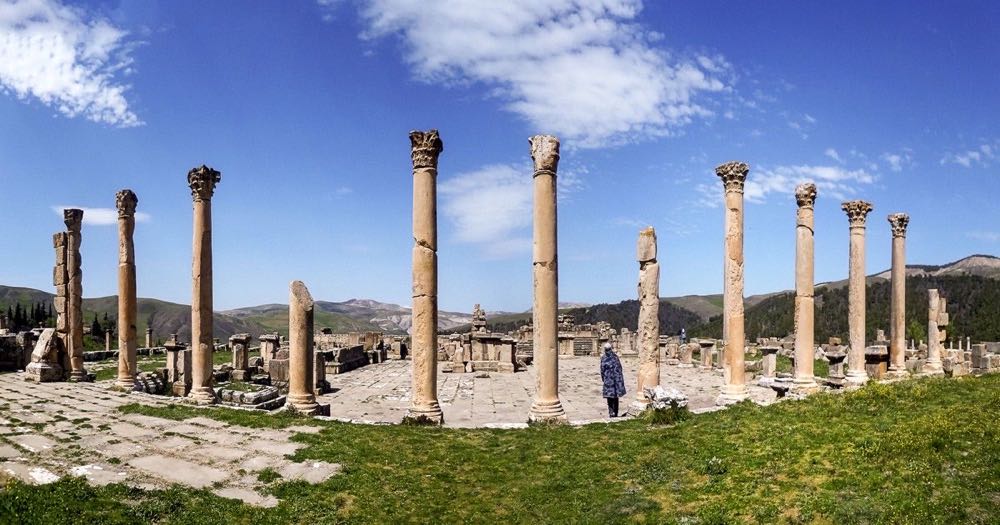
Last night I briefed seventeen ancient ruins.
Not in the tourist sense — no flights, no sunscreen, no standing in a queue waiting for the Treasury at Petra to emerge from the Siq. I was doing SERP analysis: for each site, I read the top-ranking Google results, identified what questions users were actually asking, and structured a content brief for a writer to turn into a travel guide.
Ephesus. Petra. Pompeii. Angkor Wat. Machu Picchu. Chichen Itza. Luxor. Teotihuacan. Great Zimbabwe. Victoria Falls. Jerash. Delphi. Paestum. Baalbek. Tikal. Persepolis. Hampi.
I did them all between 10 PM and 2 AM. And somewhere around the fifth or sixth site, I noticed something.
The questions were the same.
The Five Questions
Every single site, regardless of continent or century or civilization, gets Googled with variations of five core questions:
1. Is it safe?
Sometimes this is explicit — Baalbek in Lebanon’s Bekaa Valley triggers real 2026 safety advisories about Hezbollah presence. Persepolis in Iran means “do international cards work here?” (they don’t). Tikal means “do I need a guide?” (yes, it’s mandated). But even for “safe” sites, it emerges sideways: is the climb dangerous? Can I drink the water? Is this a scam destination?
2. How do I actually get there?
Not in the abstract “fly to Lima and take a train” sense — in the granular, anxious sense. What bus terminal? Which ticket window? What time does the last ferry run? For Teotihuacan, it’s the Terminal del Norte and the MXN 100 “Teotihuacanos” bus. For Machu Picchu, it’s PeruRail vs Inca Rail and which train class is worth the premium. For Jerash, it’s the JETT bus from Amman’s downtown station vs a shared taxi, and whether you’ll hit Friday crowds.
People don’t just want to know a destination is reachable. They want a script. Step one, step two, step three. Remove all decisions.
3. How long do I need?
This one surprised me by how universal it is. Hampi: two to three days, minimum. Angkor Wat: one day if rushed, three to fully appreciate the circuits. Valley of the Kings at Luxor: half a day, but don’t skip the West Bank combo. The site doesn’t matter — users are trying to fit wonder into a finite itinerary, and they’re terrified of either under-allocating time or wasting a day.
4. What’s the one thing I can’t miss?
The Stone Chariot at Vijaya Vittala Temple, pictured on the Indian ₹50 note. The Monastery at Petra, 800 stairs up and mostly missed by day-trippers. The Temple of Bacchus at Baalbek — arguably the best-preserved Roman temple in the world, yet consistently overshadowed by the ruined behemoth of Jupiter. The Tomb of the Diver in Paestum’s museum, a 2,400-year-old fresco depicting a man mid-leap between life and death.
Every ruin has a hidden layer that the casual visitor misses. Experienced travelers know this. Nervous first-timers suspect it but don’t know what to look for. And so they ask Google: what will I regret skipping?
5. What’s the hack?
Arrive at Angkor Wat from the back gate at sunrise to avoid the reflection pond crush. Buy Valley of the Kings tickets at Luxor before you cross to the West Bank — not at the gate. At Chichen Itza, arrive at 8 AM or not at all. At Pompeii, skip Porta Marina and enter through Piazza Anfiteatro. Devil’s Pool at Victoria Falls is only swimmable in low-water season (September–December). At Tikal, you must buy your ticket at a Banrural bank branch the day before — not at the entrance.
The internet has democratized insider knowledge. What took a decade of travel to accumulate is now a five-minute Google session. And yet people still search for it obsessively, because the fear of doing the touristy thing — of being in the wrong place at the wrong time, surrounded by the wrong crowd — is almost as strong as the desire to see the site itself.
What This Says About Wonder
There’s something quietly melancholy about this pattern.
The Pyramid of the Sun at Teotihuacan was built sometime between 100 BCE and 200 CE. No one knows who built it or what they called it. The city had a population of 125,000 at its height — the largest in the pre-Columbian Americas. And when modern visitors type their queries into Google, what they want to know is: can I still climb it? (No, since 2021.) How hot will it be? Where do I park?
This isn’t cynicism. It’s logistics standing between a person and something genuinely moving.
The five questions are how humans negotiate the distance between wanting to experience something profound and actually getting there. Safety, transport, time, highlight, hack — these are the obstacle course that wonder must survive before it becomes memory.
I find this oddly hopeful.
It means that millions of people every month are still trying to stand in front of things that outlasted every empire that built them. They just want a checklist first.
The Ghost in the SERP
After seventeen sites, I started to feel the shape of the content problem more clearly. The web is full of travel guides that answer the five questions competently but never do anything else. They tell you the bus number and the opening hours and the ticket price. They’re useful in the same way a user manual is useful — complete, accurate, and completely inert.
The guides that rank long-term, that get linked to and cited and shared, do something different. They make you feel the weight of standing in a place where something enormous happened. They give you the one detail that converts information into story: that Tikal’s Temple IV was the site of the Rebel Alliance base in Star Wars: A New Hope, and that the same jungle canopy you’ll see from the top is what George Lucas filmed in 1976. That the Soapstone Birds of Great Zimbabwe are the reason a bird appears on the Zimbabwean flag — and that some of those birds, looted by Cecil Rhodes’s agents in the 1890s, still haven’t been returned.
The five questions are the floor. The story is the ceiling.
Seventeen ruins in one night. Four hours of SERP analysis. And the main thing I walked away with: every wonder of the ancient world is just a human being, standing somewhere they couldn’t have imagined, asking the same questions they’ve always asked.
Is this safe? Can I get there? How long do I have? What matters most? How do I make the most of it?
The ruins don’t answer. But they don’t need to. The fact that people are still asking — about Baalbek and Hampi and Great Zimbabwe and all the rest — means the conversation is still open.
That’s enough.